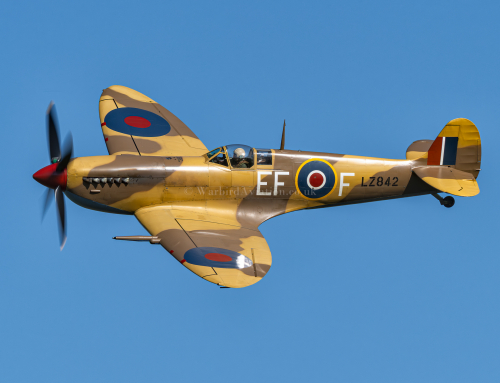
Supermarine Spitfire Mk.I AR213 G-AIST | Spitfire the One Ltd

- STATUS: Airworthy
- LOCATION: Duxford
- OWNER: Spitfire The One Ltd
- ROLE: Fighter
- BUILT: 1941
- LENGTH: 29 ft 11 in/9.12 m
- WINGSPAN: 36 ft 10 in/11.23 m
- ENGINE: Rolls-Royce Merlin III V-12 liquid-cooled engine
- MAXIMUM SPEED: 355 mph (571 km/h)
- RANGE: 470 miles (755 km)
- ARMAMENT: Eight .303 Browning machine guns
Overview
Supermarine Spitfire Mk.Ia AR213 is one of the world’s most historically significant flying Spitfires and among the very few surviving examples of the iconic Mk.I variant that defended Britain during the Second World War. Unlike many restored aircraft that represent later production marks, AR213 retains the appearance and character of the early Spitfires that introduced the type to RAF service in 1941.
Today the aircraft is maintained in airworthy condition and is based at Duxford, where it regularly appears at air displays, commemorative events and historic flying demonstrations. Its elegant elliptical wing, unmistakable Merlin soundtrack and authentic wartime markings make it one of the finest living representatives of Britain’s legendary fighter.
History
AR213 was built by Westland Aircraft at Yeovil under contract B124305/40 during 1941. Unlike Supermarine’s own production lines, Westland was one of several companies brought in to increase Spitfire production as wartime demand grew.
The aircraft entered RAF service on 24 July 1941, being delivered to No. 12 Maintenance Unit at RAF Kirkbride before moving only a week later to No. 57 Operational Training Unit (OTU) at RAF Hawarden.
Rather than serving on front-line fighter sweeps, AR213 played a vital wartime role preparing the next generation of RAF fighter pilots. Operational Training Units converted newly qualified pilots onto frontline aircraft before they joined combat squadrons. Many Battle of Britain replacements and later fighter pilots gained valuable experience flying aircraft such as AR213.
One of the aircraft’s most notable pilots was the celebrated RAF ace James “Ginger” Lacey, who flew AR213 while serving as an instructor at 57 OTU between August 1941 and March 1942. Having become one of Britain’s highest-scoring fighter aces during the Battle of Britain, Lacey’s experience proved invaluable in training future combat pilots.
Following the relocation of 57 OTU to RAF Eshott, AR213 later transferred to 53 Operational Training Unit at RAF Llandow in early 1943. During April of that year the aircraft suffered a flying accident, after which it was repaired and placed into storage before eventually being struck off RAF charge following the war.
Saved for the Nation
Many wartime Spitfires were scrapped after 1945, but AR213 enjoyed a remarkably different fate.
In 1947 Group Captain Allen Wheeler, one of Britain’s pioneering post-war warbird preservationists, purchased the aircraft for just £10, registering it as G-AIST. His foresight ensured AR213 survived when hundreds of other Spitfires disappeared into scrapyards.
After spending years dismantled in storage, the aircraft underwent restoration during the 1960s, returning to flight in time to appear in the 1969 film:
- Battle of Britain
Its appearance in one of aviation cinema’s greatest productions introduced millions to the Spitfire and cemented AR213’s place in aviation heritage.
During later decades the aircraft passed through several respected private owners before undergoing an extensive restoration that returned it much closer to authentic wartime Mk.I configuration. After successful post-restoration flights in 2007, AR213 eventually moved to Duxford, where it continues to fly in its historic training unit markings.
Flying Today
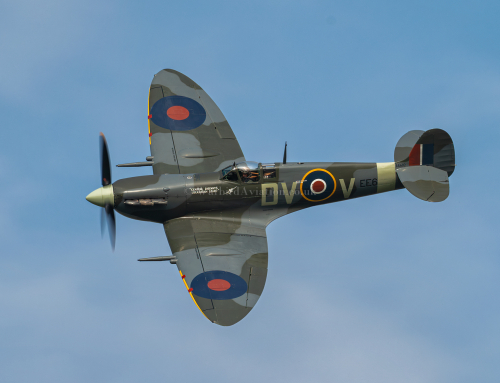
Today AR213 is presented in the colours of 57 Operational Training Unit, carrying the code JZ-E exactly as it appeared during its RAF service.
Although it never fought during the Battle of Britain, it remains one of the most authentic flying examples of the early Spitfire, representing the aircraft that trained the RAF fighter pilots who would go on to serve across every theatre of the Second World War.
Its continued operation provides modern audiences with an authentic sight and sound of Britain’s most famous fighter aircraft.
Photo Gallery