Supermarine Spitfire Mk.IXc MK912 (G‑BRRA) | Lilham Aviation

- STATUS: Airworthy
- LOCATION: Sywell
- OWNER: Lilham Aviation
- ROLE: Fighter / Fighter‑Bomber
- BUILT: 1944
- LENGTH: 9.46 m (31 ft 0 in)
- WINGSPAN: 11.23 m (36 ft 10 in)
- ENGINE: Rolls‑Royce Merlin 66, two‑stage supercharged V‑12
- MAXIMUM SPEED: 404 mph (650 km/h)
- RANGE: 434 miles (700km)
- ARMAMENT: 2 × 20 mm Hispano II cannon; 120 rpg, 4 × 7.7 mm (.303 in) Browning machine guns
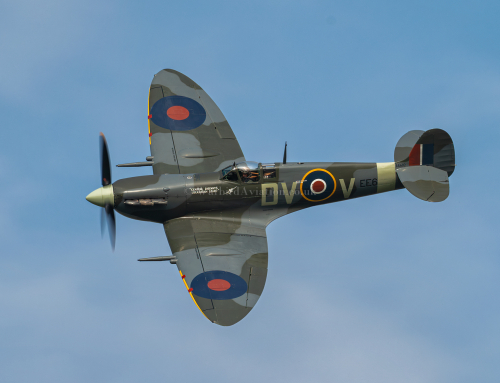
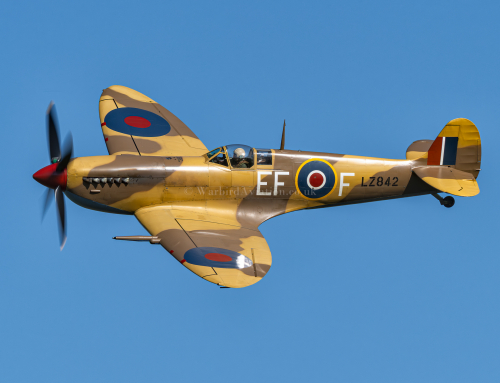
Supermarine Spitfire Mk.IXc MK912 is one of the most historically significant airworthy Spitfires in the UK, operated today by Lilham Aviation at Sywell Aerodrome. Built in early 1944 at Castle Bromwich, she served with No. 312 (Czech) Squadron, flying armed sweeps, bomber escorts, and attacks on V‑weapon sites in the run‑up to the Normandy landings. On 10 June 1944, MK912 briefly landed at the advanced landing ground B2 (Bazenville), making her one of the first Allied fighters to touch down in Normandy after D‑Day.
After a long and varied post‑war career with the Dutch and Belgian Air Forces, MK912 eventually entered civilian ownership and, following a forced landing in 2015, underwent a major nine‑year restoration. She returned to the air in July 2024, test‑flown by Dan Griffith from the Biggin Hill Heritage Hangar.
Today, MK912 is available for flypasts, static displays, film work, and airshow appearances, representing one of the most authentic flying examples of a late‑war Merlin‑powered Spitfire.
Construction & RAF Service (1944–1946)
Supermarine Spitfire Mk.IXc MK912 was completed at the Castle Bromwich Aircraft Factory in March 1944 and delivered to the Royal Air Force soon afterwards. Following acceptance at No. 8 Maintenance Unit, the aircraft was prepared for frontline operations and transferred to No. 84 Group Support Unit at RAF Aston Down in May 1944. Later that year she joined No. 312 (Czech) Squadron, flying armed reconnaissance, bomber escort, and anti–V‑weapon missions during the build‑up to and aftermath of the Normandy landings. On 10 June 1944, MK912 made a brief landing at the newly established Advanced Landing Ground B2 at Bazenville, becoming one of the earliest Allied fighters to touch down in Normandy after D‑Day. After a period of operations, she returned to 84 GSU for overhaul and redistribution as the RAF began to reorganise its fighter assets in the final stages of the war.
Post‑War European Service (1946–1953)
With the end of the conflict in Europe, MK912 was selected for transfer to the Royal Netherlands Air Force, arriving in July 1946 and receiving the serial H‑119, later re‑coded H‑59. She served both in the Netherlands and in the Dutch East Indies, where Dutch forces were engaged in post‑war operations in Java. Returning to Europe in 1950, the aircraft was subsequently sold to the Belgian Air Force, where she flew as SM‑29. MK912 remained in Belgian service until 1953, when she was finally struck off charge and passed into civilian ownership, beginning the long journey that would eventually lead to her modern restoration and return to flight.
Civilian Career & Restoration
After leaving Belgian military service in 1953, Spitfire MK912 entered the civilian world and passed through a succession of private owners as interest in preserving wartime fighters began to grow. Over the following decades she moved between collections and restoration projects, gradually progressing toward a return to airworthy condition. By the early 21st century, MK912 had become a well‑known example within the historic aviation community, flying regularly in the UK and appearing at events and experience‑flight operations.
Her civilian career was interrupted on 1 August 2015, when a forced landing caused substantial damage to the airframe. The aircraft was subsequently acquired for a full rebuild by the Biggin Hill Heritage Hangar, beginning one of the most comprehensive Spitfire restorations undertaken in recent years. The project involved a complete structural overhaul, new systems, extensive airframe reconstruction, and a full rebuild of the Rolls‑Royce Merlin 66. After nine years of meticulous work, MK912 returned to the air on 31 July 2024, test‑flown by Dan Griffith.
Following her successful flight test programme, MK912 joined the Lilham Aviation fleet at Sywell Aerodrome, where she now operates as an airworthy warbird available for airshows, flypasts, film work, and special events. Her restoration has returned her to a level of authenticity and reliability that reflects both her wartime heritage and her renewed role as one of the UK’s most significant flying Spitfires.
Photo Gallery